Costa Rica charges two annual taxes on real estate, not one. The municipal tax applies to every registered property at a flat rate, land and building together. The second, the Impuesto Solidario, only applies once a house’s construction value crosses a threshold that the Ministry of Finance resets every year. It ignores the land underneath the house entirely.
The municipal tax is 0.25 percent on everything, every year
Every registered property in Costa Rica owes the municipal property tax, the impuesto sobre bienes inmuebles, at a flat 0.25 percent (Law 7509, article 23). It is calculated on the value the Tax Administration has on file for the property, land and construction together. That value is taken as it stands on 1 January of the year in question.
Municipalities administer this tax, not the national government (article 3). They run the valuations, send the bills and collect the money. An owner must declare the property’s value to the municipality at least once every five years (article 16), and the municipality can revalue a property itself on the same five-year cycle.
The Impuesto Solidario counts construction value only, above a moving line
The Impuesto Solidario para el Fortalecimiento de Programas de Vivienda is a separate national tax, created in 2008 (Law 8683). It applies only to homes used residentially, occasionally, or for recreation, and only to the value of the construction and its fixed installations, never the land.
The exempt threshold moves every year by decree. For the 2026 fiscal period it is 143,000,000 colones (Executive Decree 45358-H, published 19 December 2025 and in force from 1 January 2026). That is lower than in 2025: the figure was adjusted down to track a 1.31 percent drop in the consumer price index over the preceding twelve months. A house whose construction value sits at or below the threshold owes nothing under this tax, however much the land beneath it is worth.
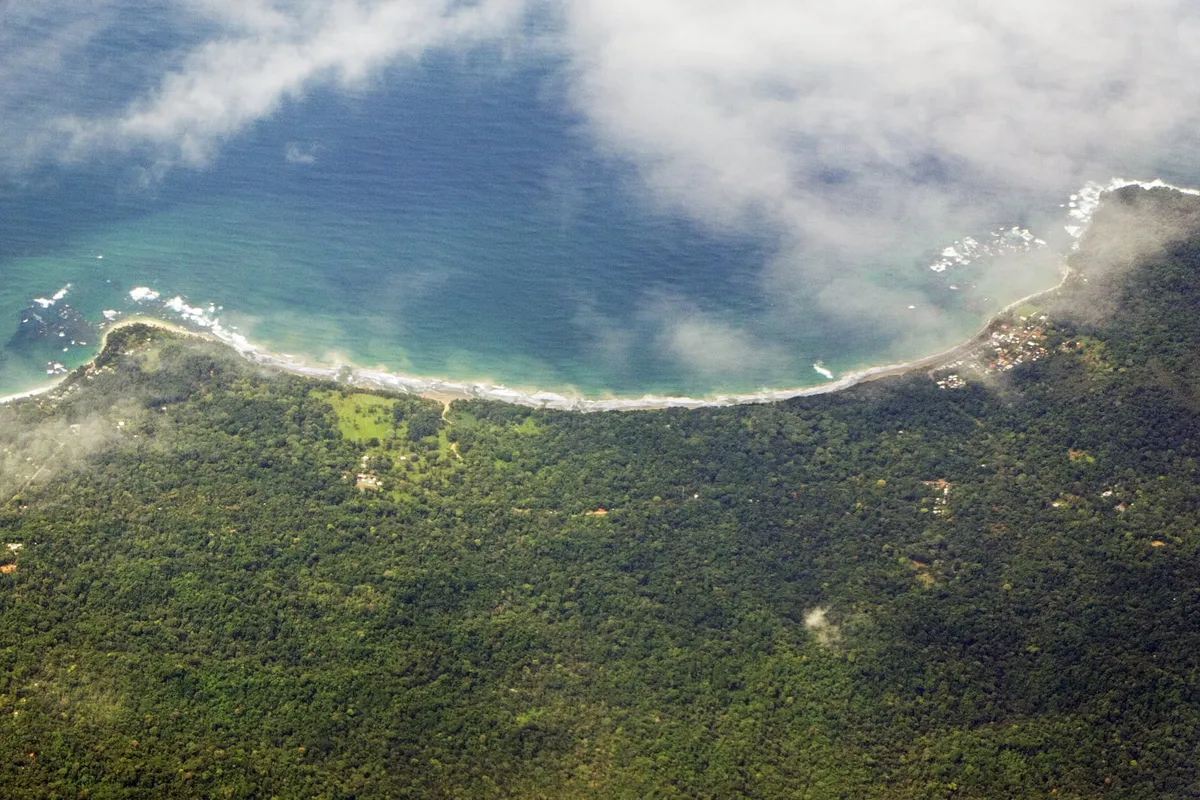
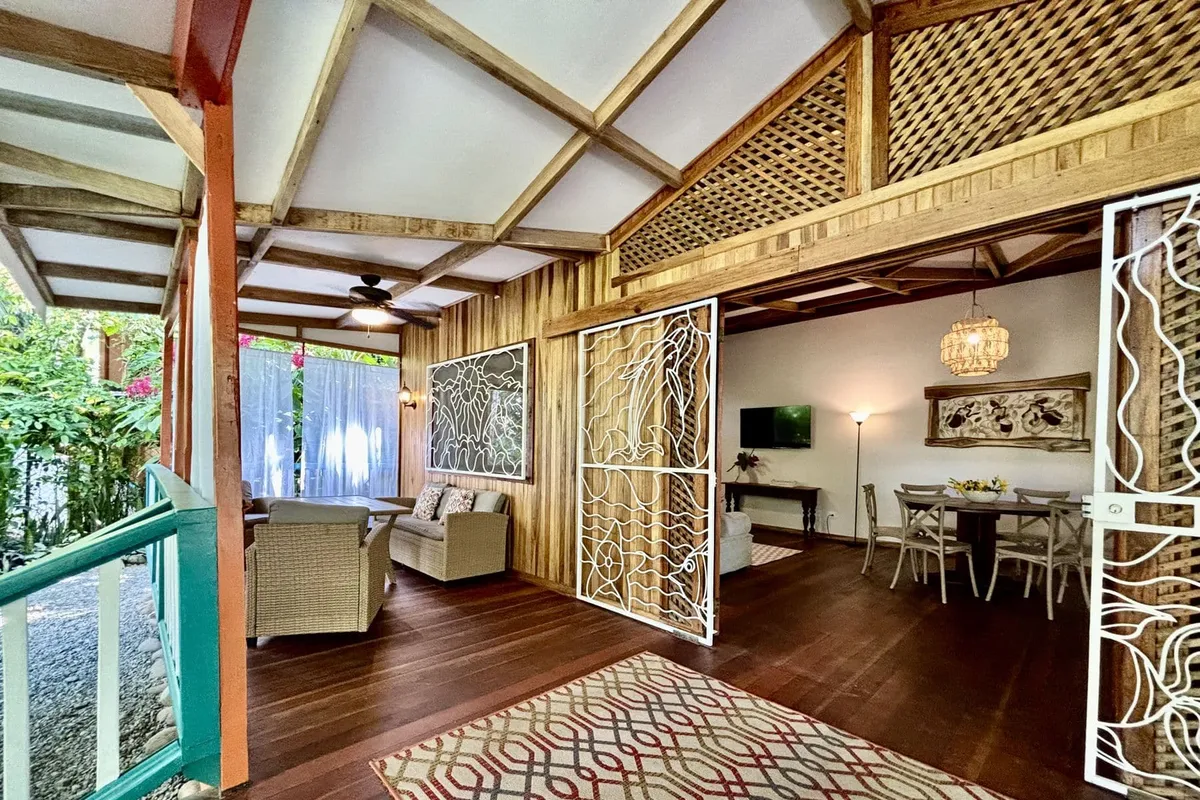
Because only the building counts, a beachfront lot with a high land value and a modest house can sit safely under the threshold. An inland property of similar total price might not, if its house is larger or more elaborate.
The revenue funds public housing programs, as the law’s own name says (the Solidarity Tax for the Strengthening of Housing Programs). That is also why the tax reaches only residential, occasional or recreational use and not commercial buildings.
Above the threshold, the rate climbs in steps
Past the exempt amount, the tax runs on a progressive scale set by the same decree:
- 0.25 percent on construction value up to 359,000,000 colones
- 0.30 percent on the portion between 359,000,000 and 720,000,000
- 0.35 percent up to 1,081,000,000
- 0.40 percent up to 1,443,000,000
- 0.45 percent up to 1,800,000,000
- 0.50 percent up to 2,162,000,000
- 0.55 percent on anything above that
Each rate applies only to the slice of value inside its own bracket. The top rate reached is never applied to the whole construction value.
An owner declares the construction value for this tax once every three years, on form D-174. The tax itself is paid every year, through the Finance Ministry’s online tax platform or at a handful of bank branches. The 2026 payment was due 15 January. The municipal tax runs on its own schedule, set by each municipality: some collect annually, others quarterly.
Talamanca’s land values sit on a map dated October 2020
For a house in Puerto Viejo or Cocles, the municipal side of the bill is set by the Municipalidad de Talamanca. Before budgeting, a buyer can ask it two things: the value on file for the property, and when that value was last revised. A Costa Rican accountant can then estimate the construction value apart from the land and check both taxes against this year’s figures.
The municipality publishes its land values on its website as maps by homogeneous zone, one per district. The map for Cahuita district, which takes in Puerto Viejo, Cocles, Punta Uva and Manzanillo, was drawn up by the Finance Ministry’s Órgano de Normalización Técnica (its valuation standards office). It is dated October 2020, and it gives the maritime zone at Puerto Viejo, Cocles, Punta Uva and Manzanillo zones of its own.
Sources
- Ministerio de Hacienda, Órgano de Normalización Técnica, Mapa de valores de terrenos por zonas homogéneas, provincia 7 Limón, cantón 04 Talamanca, distrito 03 Cahuita, October 2020, published on the Municipalidad de Talamanca’s Zonas homogéneas page.